
TL:DR: Who has the GoDaddy login?
The situation: Your pharmaceutical or biotechnology company is small but growing. It got funding, is about to announce results, launch a product or go public. It’s time for the next level of website.
So, you hire a company like Workbox. One of our first questions will be: “Who manages your domain?”
You would be shocked at how often folks don’t know the answer to this question.
First, a little background. Your company’s domain is something like “groovypharmabiotech.com.” Technically, this is a domain name. We ask who owns it to understand who we might be working with if we need to change the web host.
To make it confusing, the acronym “DNS” is used interchangeably with your domain name, the domain name service provider and the various settings associated with a specific domain (like www and email).
That means we might instead ask: “Who manages your DNS?”
Either way, it’s a nuisance, but EXTREMELY important because your DNS is used to manage your website, your company’s email and, possibly, lots of other services you aren’t aware of.
Why small companies lose track of domain ownership: In smaller pharma and biotech companies, the domain name is often purchased by a founder or an assistant. Or, it could have been purchased by the web developer or agency that launched your company’s first website. Or it could have been bought by an IT contractor.
NOTE: Bad things can happen if your company loses control of the domain. If your domain registration expires, someone else (like a competitor) can buy it. And a disgruntled employee can cause real trouble: https://aftermath.site/thats-no-moon-lawsuit-domain-allegedly-hijacked/
No matter what, be sure to find whoever manages your domain registration ASAP!
If you’re having trouble digging up ownership information, you can drop your domain name into a Whois service like:
https://www.godaddy.com/whois
That will show who owns it, when it was purchased, when it will renew and other stuff. If you see the words “Domain by Proxy,” that means the owner is hiding their identity, so … let’s hope you find who manages it.
The domain name is typically managed through a domain service provider like GoDaddy, CloudFlare or CSC. Ultimately, you’re looking for whoever has a login to that service.
PRO TIP: Be sure ownership of the domain is under an account owned by the company, not an individual employee or contractor.
That’s it for tip #1. Questions, comments? Let me know!
> Back to the Pharmaceutical and Biotech Website Redesign: 10 Tips For New Sites article.
The situation: Your pharmaceutical or biotechnology company is small but growing. And something noteworthy is happening: it got funding, is about to announce results, launch a product or go public. It’s time for the next level of website.
You’ll need content, design and maybe a content management system. Maybe you get it all from the same agency or maybe from a mix of vendors.
Either way, you’ll encounter people like me – web people. We try not to be confusing, but we have our own language and, well, it can get kind of geeky. I’m here to help.
This series of short blog posts is our attempt to remove the mystery and eliminate confusion around some of the most common issues you’ll encounter during a web redesign project. We’ll be adding the individual posts over the course of the next month or so.
Ultimately, Workbox wants you to succeed with your website project.
More of the basics: Effective medical affairs websites have solid scientific content, two-way engagement, and a familiar structure. And most importantly – they don’t waste time. Here are examples of how one large, one mid-sized, and one small pharmaceutical or biotechnology company excel.
Tip 1: Provide Clear, Credible Scientific Content
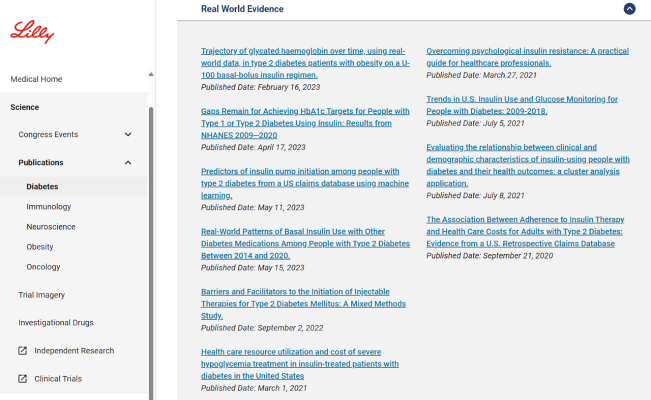
Example: Lilly Medical (Market cap approx.: $667 billion) – https://medical.lilly.com/us/ Lilly Medical’s HCP portal delivers high-quality, non-promotional scientific content across therapeutic areas. From clinical trial updates to peer-reviewed publications, every piece is concise, referenced, and easy to search. The site avoids marketing spin and prioritizes evidence, making it a go-to for HCPs who want trustworthy, scientifically rigorous material.
Tip 2: Facilitate Two-Way Scientific Exchange
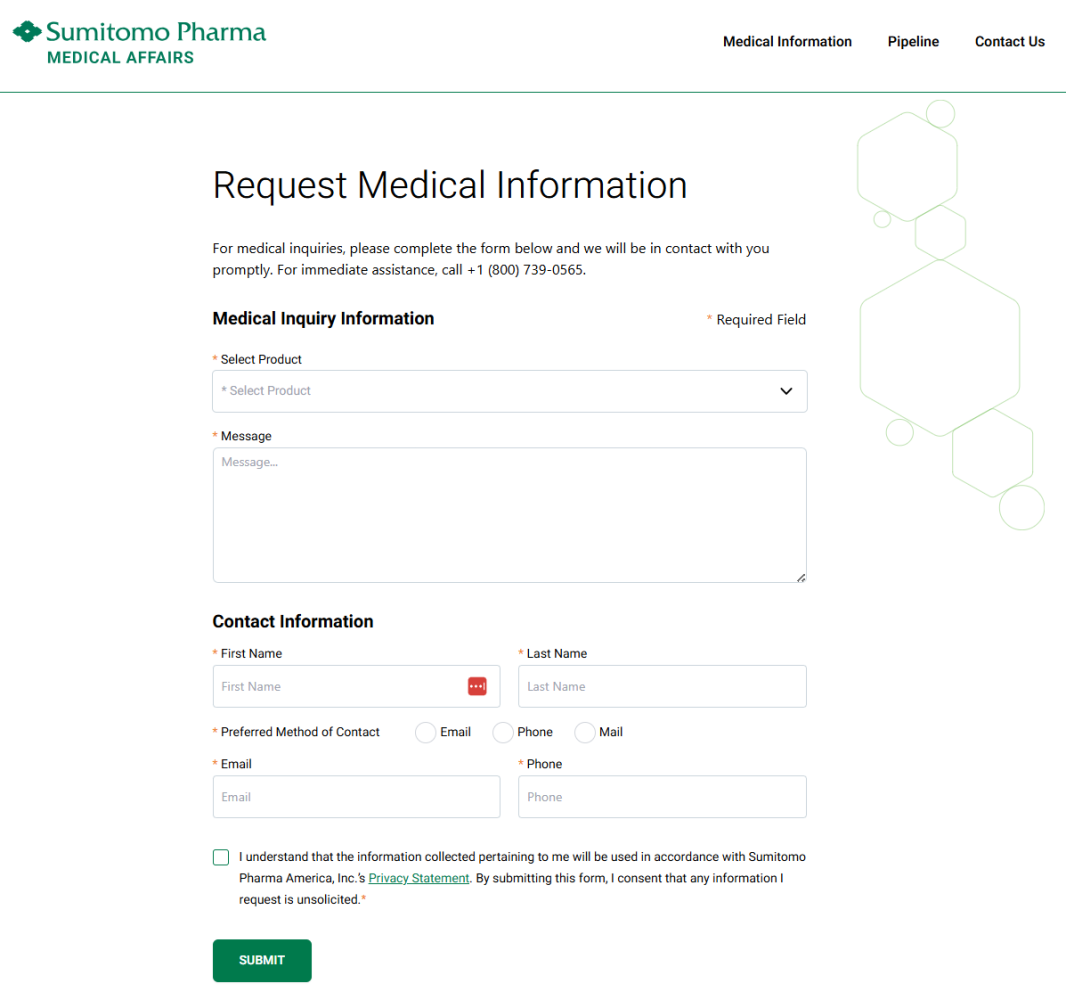
Example: Sumitomo Pharma America – Medical Affairs Portal (Market cap approx.: $3.71 billion) https://www.smpamedicalaffairs.com/ Sumitomo’s site stands out for enabling genuine interaction. HCPs can directly contact MSLs, submit medical inquiries, and report adverse events. Each therapeutic area page links to specialists and resources, making it easy for HCPs to connect with the right people and start a conversation—not just read static information.
Tip 3: Keep Navigation and Access Familiar
Example: Paratek Pharmaceuticals – Medical Affairs Portal (Market cap approx.: $127 million) https://www.paratekpharma.com/medical-affairs Paratek keeps things lean and efficient. They didn’t reinvent the wheel – they followed industry standard navigation, structure and functionality. After quick HCP verification, users see a clean, well-structured site grouped by publications, disease education, and product-specific information. No clutter, minimal clicks, and clear pathways to resources mean busy HCPs can get what they need in seconds.
Side note: We love the bold design – it stands out!

The Takeaway
Whether you’re a global powerhouse or nimble newbie, the same principles apply:
Let’s focus on the basics: when designed right, medical affairs websites build a bridge between pharmaceutical companies and healthcare professionals (HCPs). They also showcase scientific credibility while enhancing brand reputation. Medical affairs and marketing teams should work together on these three elements to build a high-impact medical affairs site:
1. Audience Engagement. Medical affairs websites serve multiple audiences: healthcare professionals, researchers, medical science liaisons, KOLs and sometimes payers. The content should be clearly structured around their needs—scientific data, clinical study information, disease education, product mechanisms of action, and (importantly) the ability to contact medical science liaisons (MSLs). From a marketing standpoint, this structure is about both brand positioning and utility (engaging with KOLs). The site should highlight the company’s scientific leadership and reinforce trust but maintain a balance – no promotional overreach.
Pro tip: Define success: what can you measure? Obviously, traffic, downloads, MSL contacts are great KPIs. Also consider the trends. What type of content or subjects are getting more or less attention over time?
2. Seamless Access and Verification Workflow. Many medical affairs sites require HCP authentication to access certain materials. While verification is necessary, it shouldn’t be a barrier. Smart user experience design can streamline sign-ups, offer multiple credentialing options (e.g., NPI), and remember users (cookies, if possible) without compromising security or privacy. For marketers, this is where user retention can stumble. If access is frustrating, users won’t return. A seamless authentication experience boosts engagement and repeat visits.
Pro tip: Find users who complain. MSLs, HCPs … these squeaky wheels will help you improve.
3. Credible, Up-to-Date Scientific Resources. Nothing undermines credibility faster than outdated or poorly sourced materials. A strong medical affairs site is continuously updated—peer-reviewed publications, medical congress updates, FAQs from the field, and insights from medical science liaisons (MSLs).
Pro Tip: Marketers should use medical affairs websites as an ongoing engagement engine. Fresh, credible resources encourage return visits, congress and event attendance, MSL contacts, and long-term trust in the company’s scientific contributions.
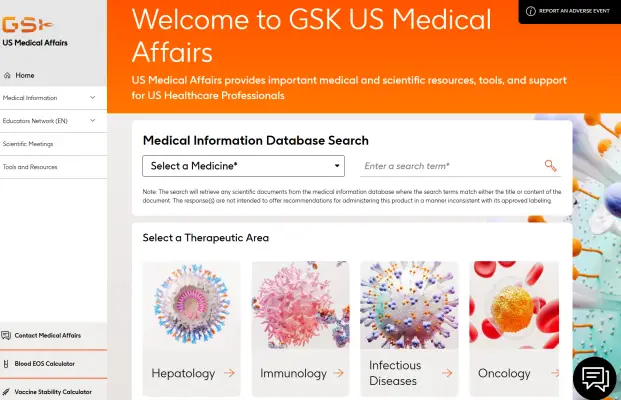
1. GSK US Medical Affairs – Market cap: Approx. $78 billion
Why it stands out:
Note: This MA site is massive! GSK did an impressive job arranging and managing so much information.
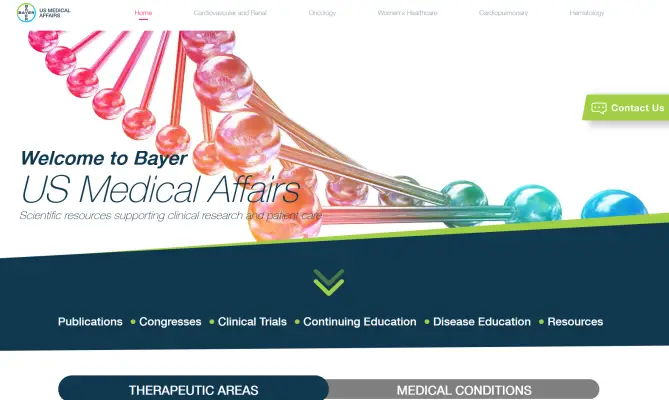
2. Bayer US Medical Affairs – Market cap: Approx. $30 billion
Why it stands out:
3. Axsome Medical Affairs – Market cap: Approx. $5 billion
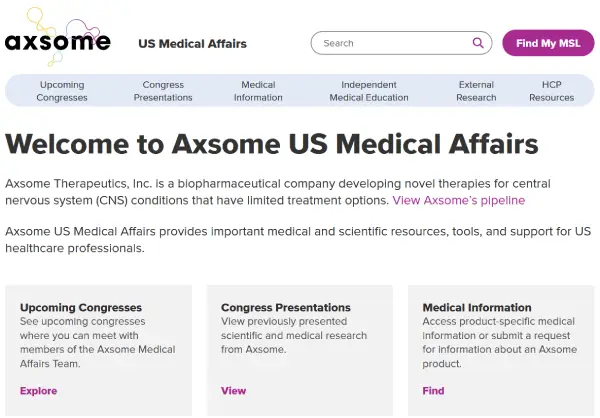
Why it stands out:
Note: This MA site is much smaller than the previous examples, but it is clean, straightforward and gives Axsome, which is a relative newcomer compared to GSK and Bayer, room to grow and drive engagement.
Conclusion: Great medical affairs websites balance function and credibility with a polished, user-friendly experience. For marketers, they’re not just digital filing cabinets—they’re platforms for meaningful HCP engagement, brand elevation, and scientific storytelling.
Here are some more basics for pharmaceutical companies and pharma marketing agencies that are beginning a medical affairs website project.
I sometimes joke that we’re plumbers at Workbox. Or maybe electricians. What I mean is that we build the stuff that you don’t always see but makes websites work. From that perspective, we’ll cover some of the issues that we’ve seen folks neglect or not consider up front when building a medical affairs website. Identifying and defining these issues early in the process will make your IT team, security team and dev partners very happy – and definitely save time and money.
1. Domain, Directory, URL. This might sound obvious, but med affairs teams sometimes forget to tell their IT department or website developer what they’d like the actual URL or domain for the site to be. Here are the most typical types of domains or URLs that we’ve seen (we’ll use wbxpharma.com as the company’s main website domain):
1.1. Subdomain – Example: medicalaffairs.wbxpharma.com. The “medicalaffairs” part is the subdomain. It appears before the main domain (just like “www”). This is handy because you can create a whole separate site, and your IT team can create and manage the subdomain through their DNS service. Easy.
1.2. New domain – www.wbxpharmamedaffairs.com. This is a whole new domain. This technique is also handy because your IT team can purchase the domain for you, then you and your dev partner are off to the races. Also, easy.
1.3. Directory URL – www.wbxpharma.com/medaffairs/. This is the simplest way to create a URL. It can be done using your content management system and doesn’t require your IT team to get involved. This is best if your company only has a few products or just a small amount of medical affairs content.
2. Email delivery from forms. If you build a form on your site and want a confirmation, “thank you” or other type of email to be sent upon form completion, you should tell your IT team and/or web development partner about it right away.
Here’s why: Very few email delivery features on a web server are HIPAA/PHI compliant. However, you could possibly send HCP professional data via email (if it’s done right), but not PHI data.
Additionally, not all website platforms have email delivery set up for the web server by default. And if they do, you still might run into identity or security issues that could get your domain blacklisted (on top of HIPAA issues if your web server is not HIPAA-compliant).
So, discuss any form functionality with your IT team and dev team – before you get a final proposal from your vendors!
3. Form data storage. This is a biggie and can be a challenge. Or it can be very easy (at least for you). Really, we’re talking about data collected from (mostly) HCPs. A few options:
3.1. Veeva – Build an API and drop all your data into Veeva! This is what the cool kids do. And, it’s simple for the med affairs team because you won’t be doing the hard stuff. Your IT team and your dev partner will – they’re built for this kind of stuff. Give them a chance to shine! Middleware could be something lightweight (Node.js, Python Flask, AWS Lambda). They’ll know what that means. 🙂
3.2. Amazon S3 – Again, there’s a good chance your company is already using something along these lines. A solid dev partner can work closely with your IT folks to make this work.
3.3. Other solutions – There are a few other ways to handle this, but the best solution is to leverage what your company already uses.
Note: We’ve encountered IT departments that have built great in-house data solutions (or have great SaaS partners) and are just waiting to help!